

Weak Acid and Base Equilibria
Quick Notes
- Weak acids and bases do not completely ionize in solution.
- They exist in equilibrium with their conjugate forms.
- Ka (acid dissociation constant) and Kb (base dissociation constant) are used to describe the extent of ionization and the “strength” of the weak acid or base.
- Relationships:
- Ka = [H3O+][A−] / [HA]
- pKa = −log Ka
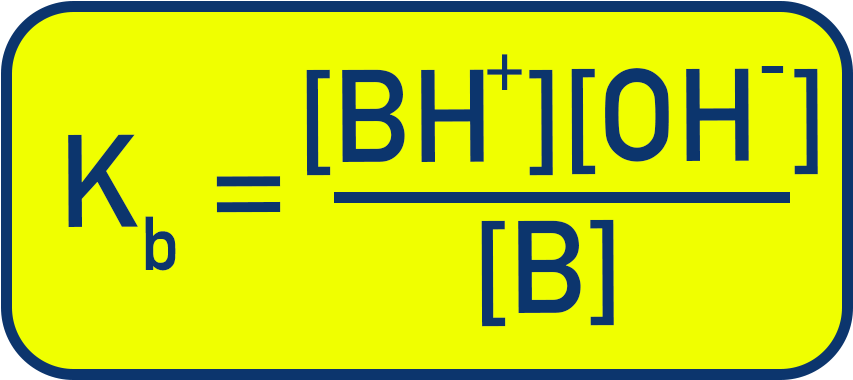
- Kb = [OH−][BH+] / [B]
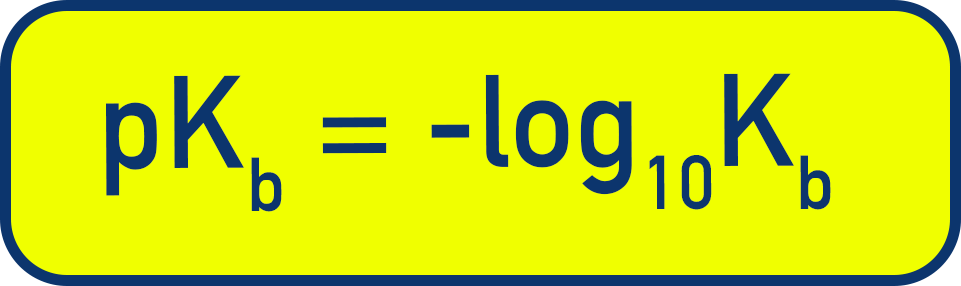
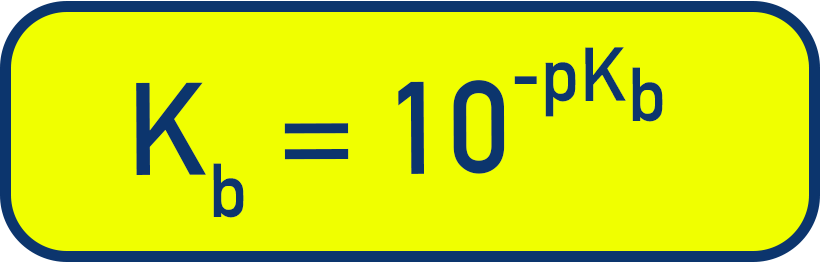
- pKb = −log Kb
- Kw = Ka × Kb
- pKw = pKa + pKb (at 25 °C, pKw = 14.0)
Full Notes
Weak Acids
A weak acid only partially ionizes in water. This means only a small fraction of the acid molecules react with water to form hydronium ions (H3O+). As a result, the concentration of H3O+ in solution is much lower than the initial concentration of the acid.
An equilibrium is established between:
- Undissociated acid molecules (HA)
- Conjugate base ions (A−)
- Hydronium ions (H3O+)
The equilibrium can be written:

Where
- HA = weak acid
- A− = conjugate base ion
- H3O+ = hydronium ion
For exampleethanoic acid (CH3COOH):
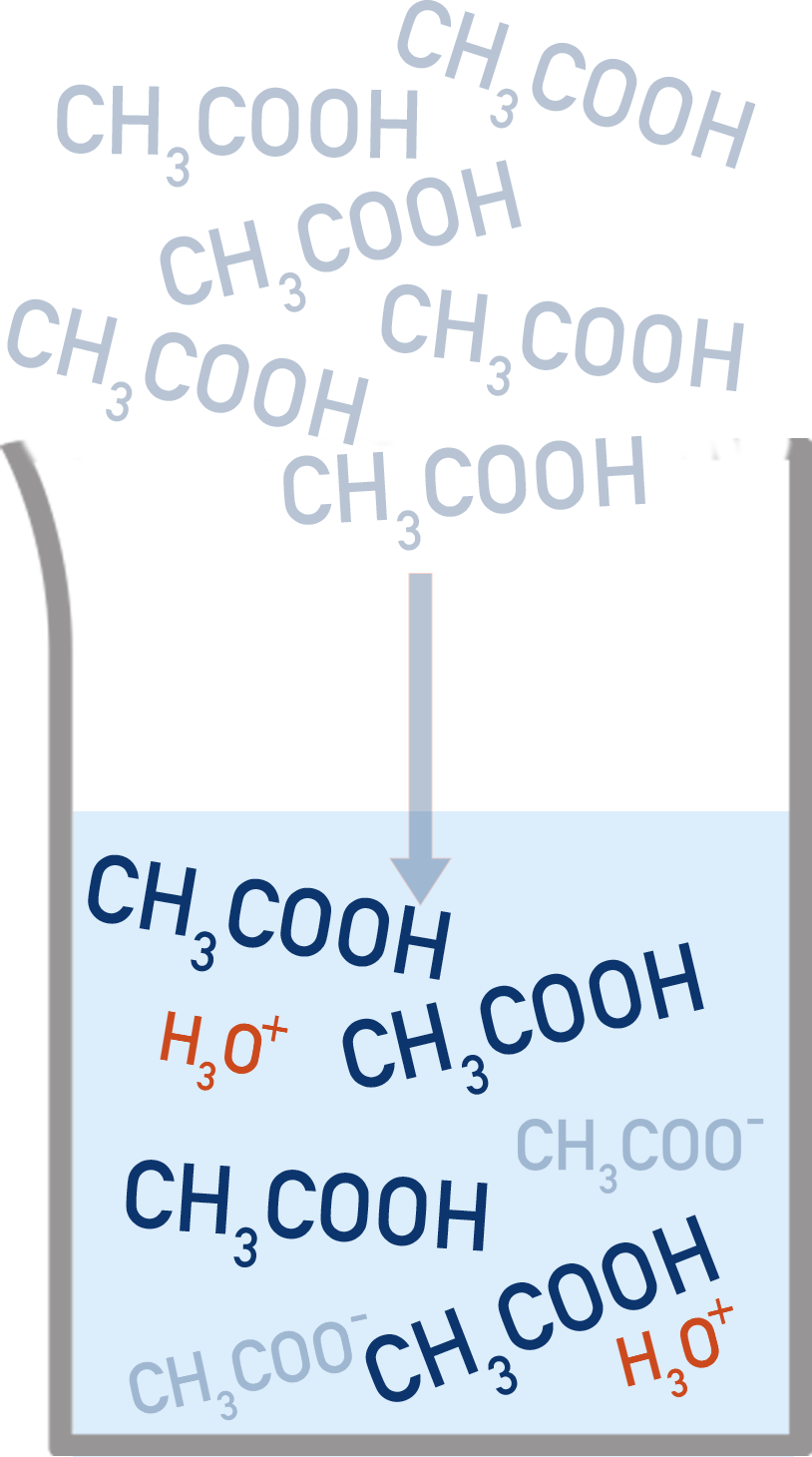
CH3COOH ⇌ H3O+ + CH3COO−
where HA = CH3COOH and A− = CH3COO−
Only a small proportion of CH3COOH molecules ionize, so the solution contains a mixture of all three species.
Acid Dissociation Constant, Ka
Because weak acids form an equilibrium system, we use an equilibrium constant, Ka, to quantify the extent of ionization:
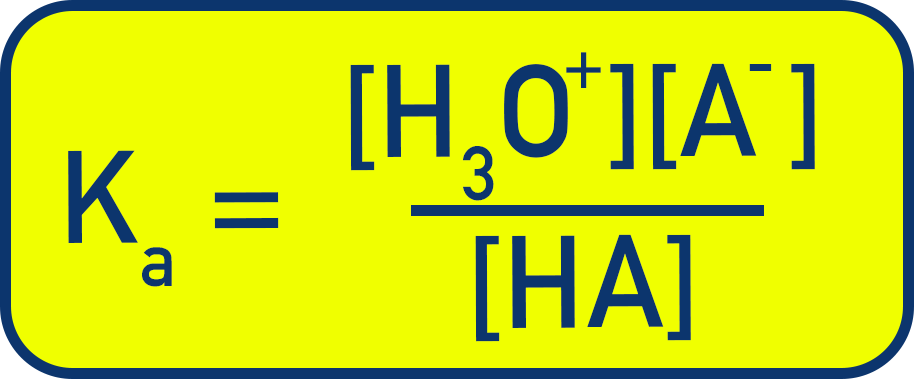
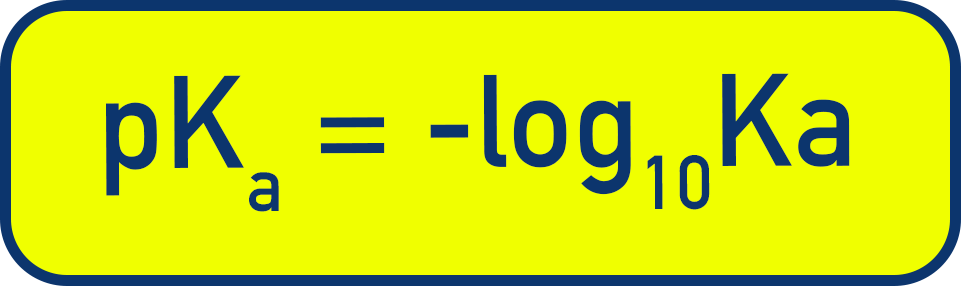
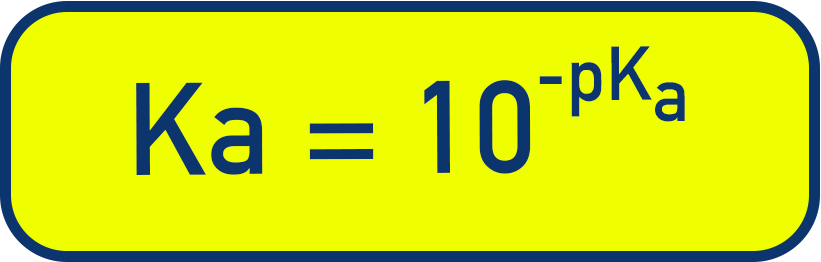
Smaller Ka = weaker acid
Larger pKa = weaker acid
Percent ionization of a weak acid:
% ionization = ([H3O+] at equilibrium / initial [HA]) × 100
Weak Bases
Weak bases react partially with water. They accept protons to form their conjugate acids and produce hydroxide ions (OH−). Unlike strong bases, which dissociate fully, weak bases establish an equilibrium in solution.
For a generic weak base, B:

Where
- B is the weak base
- BH+ is the conjugate acid formed when the base accepts a proton
- OH− is the hydroxide ion released into solution, increasing basicity
The position of this equilibrium depends on how effectively the base accepts protons from water (its base strength).
Base Dissociation Constant, Kb
As with weak acids, the strength of a weak base is described by an equilibrium constant:
Smaller Kb = weaker base
Larger pKb = weaker base
The majority of the base remains unreacted in solution.
Percent ionization of a weak base:
% ionization = ([OH−] at equilibrium / initial [B]) × 100
Relationship Between Ka and Kb
Acids and bases exist in conjugate pairs, and their strengths are linked. If you know the strength of a weak acid (Ka), you can determine the strength of its conjugate base (Kb), and vice versa.
Key Relationship:
Ka × Kb = Kw
pKa + pKb = pKw
At 25 °C:
Kw = 1.0 × 10⁻¹⁴
pKw = 14.00
This allows interconversion between Ka and Kb (or pKa and pKb) for any conjugate pair.
Deriving the Relationship
For a weak acid, HA:
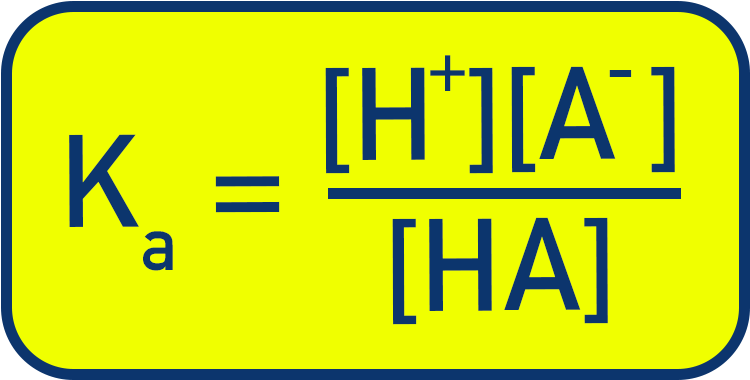
And for its conjugate base, A−:

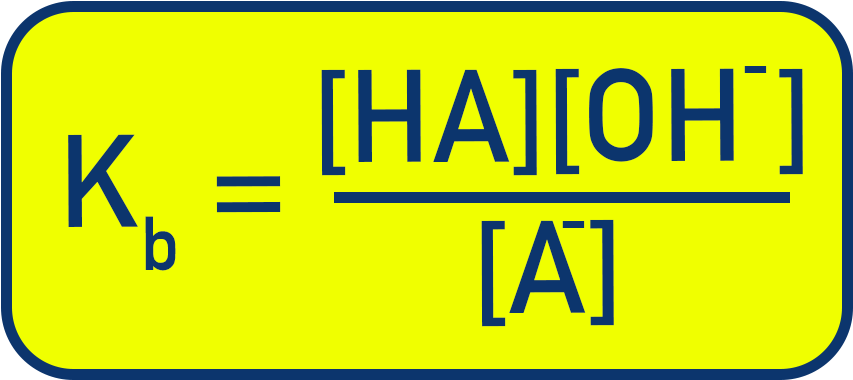
Multiplying these together:
![AP Chemistry derivation showing Ka times Kb equals Kw after cancelling A− and HA, resulting in [H+][OH−] = Kw](images/kwha.png)

Don’t forget H+ and H3O+ can be used interchangeably in these expressions — like on this page deliberately. Get comfortable seeing both used.
Summary
- Weak acids and bases partially ionize, and their behavior is described by Ka and Kb.
- Use equilibrium expressions and ICE tables to calculate pH, [H3O+], or [OH−].
- The percent ionization reflects how much acid or base reacts.
- Ka and Kb are linked through Kw: Ka × Kb = Kw and pKa + pKb = 14 at 25 °C.